You Can Be Yourself on LinkedIn

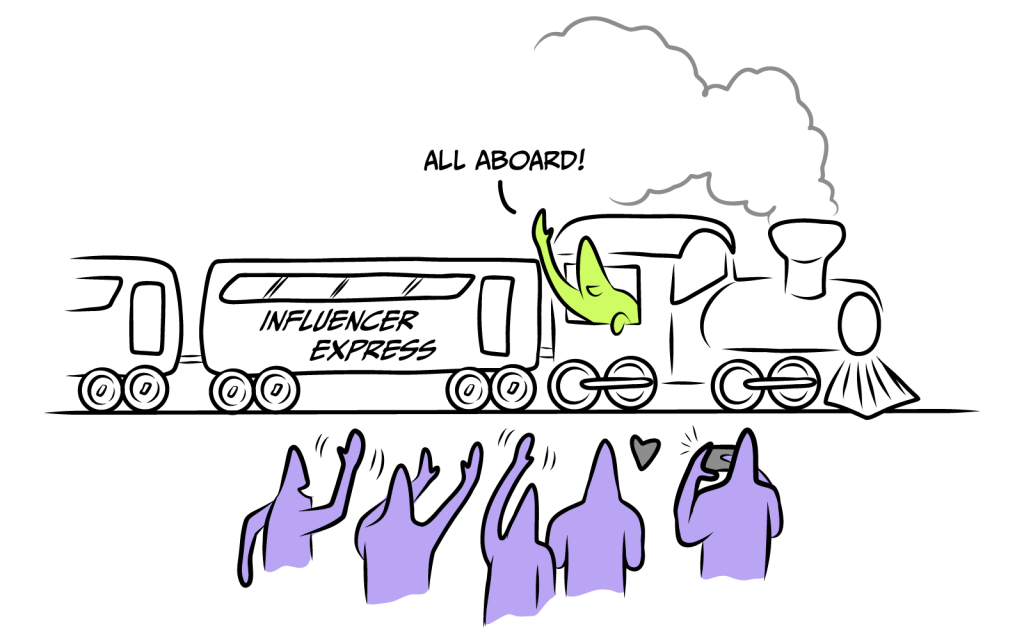
You may not think of yourself as an influencer; you really just want to own a business that doesn’t lack for clients, and people seem to think that you need to be on LinkedIn to round out some of the other things you’re doing. (You are doing other things, right?)
Participation on LinkedIn—we’ll just stick with that platform—feels kind of mandatory, sort of like a chore, and a little bit performative. I really think this is sad, and I want you to think about this differently.
TL;DR It’s useful to be on LinkedIn, if you want to be, but you don’t need to borrow from the influencer world.
The Roots of “Influencer”
I want to define this, first, because while paid endorsements actually go back thousands of years, I’m talking about the more modern influencer movement. When I use the influencer phrase, though, I’m speaking of ordinary people who build their own audience in order to sell something to that audience on behalf of someone else. Think a young person who sells fashionable items and is reimbursed for that endorsement in some way, either with money or product.
We’ve worked with many clients in this space, in fact. E.g., one small agency that connects hardware brands with thousands of ordinary people who post videos using the products effectively and touting their value.
Fast forward to this year, and influencer spend, in the US alone, will top $10B. It’s come a long way. So far, in fact, that the FTC has specific disclosure rules to force the surfacing of those incentives.
The Professionalization of “Influence”
Let me just start by saying that influencer culture has given a lot of fine people a nice way to make a living, but it’s also created some very unhealthy practices and even perverse incentives. Let me illustrate.
A few years ago, Sophie Bishop, a faculty member at the University of Leeds, published a fascinating academic study that identified three aspects of influencer culture:
- Self-branding. In other words, if I’m an influencer, I am smack dab in this transaction. You buy this because you trust me. I’m not pulling marketing strings in the background. I’m front and center.
- Constant optimization. Nobody really knows the deep insides of the algos on the various platforms (Instagram, TikTok, FB, Snap, etc.). But like SEO, where the algo might change every two days, the best influencers are successful if they have an obsession with constantly staying present in those algos or the money stops. There’s no taking a day off. It’s about understanding light, motion, sexuality, humor, and a dozen other things.
- Performative Authenticity. To quote Bishop, this means “cultural expectations for artists to share more and more of their ‘authentic’ selves on social media platforms. Content must be aspirational and commercially viable, while also conveying a convincing emotional performance that it comes from within an influencers’ [sic] genuine self.”
Does this sound healthy to you? Does this sound like the gig you want to sign up for with all the rules of doing LinkedIn well? The study doesn’t think so, either: “Considering these tenets of influencer creep, the expectation to maintain visibility creates and sustains a pervasive atmosphere of anxiety for influencers, artists and beyond.”
The damage hasn’t just been contained in the professional influencer field, either. There’s some crossover, and you’re expected to perform a certain way on LinkedIn, even though you’re not necessarily selling lip gloss or a skateboard.
We Aren’t Them
So what does all that mean? It means you’re probably adopting the “best practices” of a professional influencer, hating it, coming up short, and wondering what game we’re even playing, here. And I’m with you.
You don’t get the attention the big players get. You pour your soul into a post…and three people post AI-generated comments that are insultingly off-target and say nothing.
You’re not an influencer. I’m not an influencer. We’re both people with businesses to run. So against that background, what would I recommend?
- Only do LinkedIn if you want to. If you’re doing it for the accolades, you’ll do stupid shit to earn it and it won’t be you. Do it or don’t do it. There are a lot of very successful people who don’t do anything on the platform. But if you do…
- Never use a playbook. Never read one. You’ll pick up the key tips on your own and the rest of the ones you might follow are going to make you sound robotic.
- Be yourself, in other words. If we aren’t going to like you, you’re better off knowing that sooner rather than later. I like interesting people. Be interesting.
- Be transparent, but not performatively transparent. Don’t look for stupid connections between how you fed a homeless vet and how you lead at work. People want to buy from people. It’s not LinkBook, right, but it’s moving in that direction and overall I think that’s good.
- Be very careful and intentional about pissing off half the world with your political divisiveness, regardless of what side you’re on. It’s best to imagine being invited to a neighborhood party honoring some college student who just graduated and giving an uninvited speech that has nothing to do with the occasion.
- Be helpful. I think this is the most useful suggestion that I try to follow myself. Point something out. Invite deeper thought. Practice curiosity, with maybe a tentatively held belief, asking for feedback. And then, every once in awhile, just lay it out like an old man screaming at clouds when you must, but they’ll forgive you for that if you’re normally helpful.
- If you’re running a big enough firm to have a comms department, respectfully pretend to listen to them, and maybe adopt a suggestion or two, but never let your comms team dictate your participation. Nobody wants a relationship with your comms team—they want a relationship with you. And if you let someone else or worse, AI, write your posts, your board should fire you.
- Avoid engagement farming of all kinds. I.e., activity without adding any specific value. Commenting on people’s posts so they notice you, reposting to flatter someone, etc.
- Have a perspective. Talk like someone is paying you for an opinion and they are listening carefully. Don’t be overly fearful and cautious. After reading some of your posts, someone should want more…or less…of them.
The Belonging Equation
Luke Burgis wrote something about mimetic desire the other day. He was using different examples—not this—but I think it applies. If I can borrow his language, knowing what to do to promote yourself on LinkedIn is “an illustration of a deeper, hidden social force. That is the relentless, often unconscious, need for humans to reassure themselves they are in sync with their group... I am part of the tribe and I know the rules.”
René Girard is the philosopher who came up with that phrase: mimetic desire. Burgis goes on to summarize Girard: “Human beings are expert imitators (mimetic comes from a Greek word meaning “to imitate”). Science has shown that we are the most imitative creatures on the planet, and we imitate in a far more complex, symbolic way than any known animal.”
You may appreciate all the deep thoughts, here, but wonder why the heck I’m applying it to LinkedIn. Well, it’s the central community where early business connections are built, and it’s a damn sad one at that. Fully 40% of LinkedIn posts are apparently AI-generated, already, and it’s only going to get worse (Pangram). Participate if you want, and please do, but at least be interesting, be yourself, and then quit worrying about what happens. If for some reason beyond your control you become an unwitting influencer, confess your sins and rethink your life choices.