The Science of "Muddling Through"

You can feel the air leave the room during certain planning sessions in your conference room. Someone’s drawn a matrix and slapped “Three-Year Roadmap” across the top in all caps. You’re trying to keep a straight face, but you know how “the best laid plans” and all that last in your firm: by Tuesday, you’ll struggle to remember the big initiative, much less the specific components of how you’re going to implement that three-year plan.
When I heard about “muddling through” a year ago, I thought for sure it was some casual description of how someone was getting through their todo list or something, but it’s actually a phrase that came on the scene in 1959, when Charles Lindblom, a political scientist at Yale, published an article called “The Science of ‘Muddling Through’”.
Ideal vs. Actual
He knew, like we do, that a rational planning model looks like this: define the goal, name all the alternatives, study each carefully, and then choose the most logical path to achieving success. What he noted is that hardly any decisions are actually made that way. Instead, they are smaller, messier, and full of all kinds of stops and starts.
Not too long ago I wrote about how your job as a leader is to make decisions. Hopefully, most of those decisions will be the correct ones, but that’s not your job. Your job is to make decisions, hoping they are right. If you mix up the order of those two things, you’ll focus on being right…and the uncertainty that always surrounds big decisions will leave you paralyzed, with not enough decisions being made. And I pointed out that not making enough decisions is far more dangerous than making wrong ones.
Adapting by Muddling Through
So back to how that relates to muddling through. Lindblom said that we don’t make big decisions super logically because of:
- Complexity: real-world problems are too complicated to map out thoroughly.
- Limited information: we never have all the data we need to see the full picture.
- Time/resource constraints: we don’t have the time or resources to account for every angle.
- Political realities: radical changes are always going to face resistance.
- Uncertainty: which makes large, decisive action terrifying.
What he noted is that humans take many factors into account, some that we should and some that we shouldn’t, and we make a bunch of small decisions on the way to a better outcome. It’s just the way it is.
I can, and often do, paint a picture of exactly what a client should do, and inevitably a client steps back from that decision and makes a smaller one. On the 2 Bobs podcast, we even talk frequently about reinventing your firm one client at a time, sort of like you fix your firm one (small) decision at a time.
Direction over Pace
I’m here to say that’s alright. I’ll take what I can get. I don’t care about pace as much as I care about direction. If all the courage you can muster means you make this one small change, let’s do it and call it a day. Many more days come after this.
Many real problems are too complex to model. You never have complete information, and you certainly don’t have reliable knowledge of outcomes. Analyzing every option thoroughly would cost more than the decision is worth. There are political realities inside your firm. Maybe it’s a partner who won’t budge or a key employee whose cooperation you need, but the truth is that radical changes meet resistance in proportion to how radical they are. And because the future is genuinely uncertain, small steps preserve something really important: movement.
I’ve watched a lot of principals plan their way into paralysis. (Like a thick marketing plan that’s just sitting there.) Big planning can give you a sensation of progress, sort of like wetting your pants in a dark suit: you get a warm feeling but nobody notices.
Distinguish Between Big/Little Decisions
If a decision is expensive and irreversible—buying a building, taking on a partner, selling the firm, championing a new positioning—then slow down. Get outside counsel. Do the boring analysis. You get one attempt, and the cost of being wrong is pretty severe.
But most decisions aren’t like that. Just try something, keep what works, abandon what doesn’t, and start calling everything a trial.
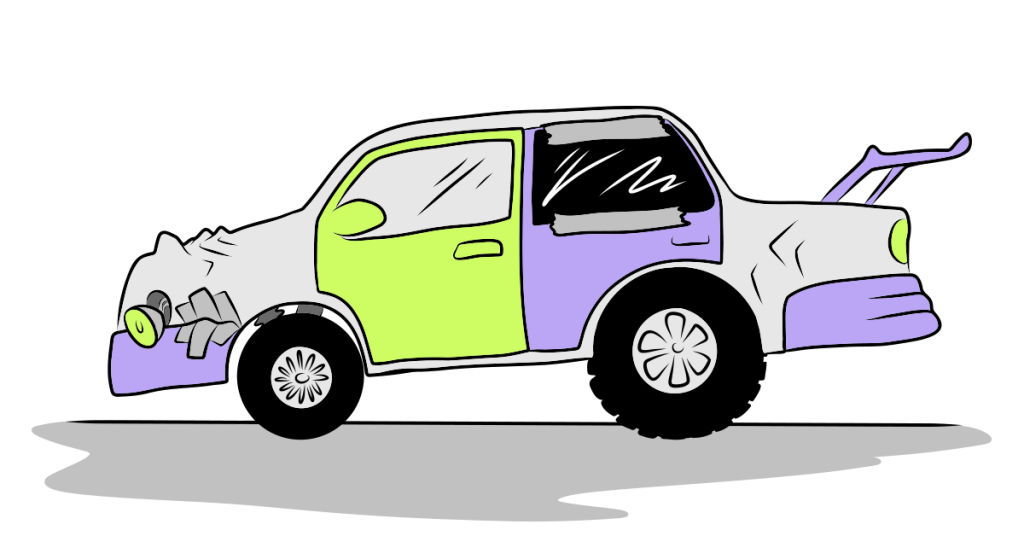
The enduring firms aren’t the ones with the best plan. They’re the ones that kept adjusting, noticed sooner when something wasn’t working, and were never so committed to a grand design that they couldn’t walk away from it. They made a lot of decisions, and then they killed things that weren’t working, and quickly.
Muddle well, sometimes. You’ll be okay.