Dip Your Toe in Productization

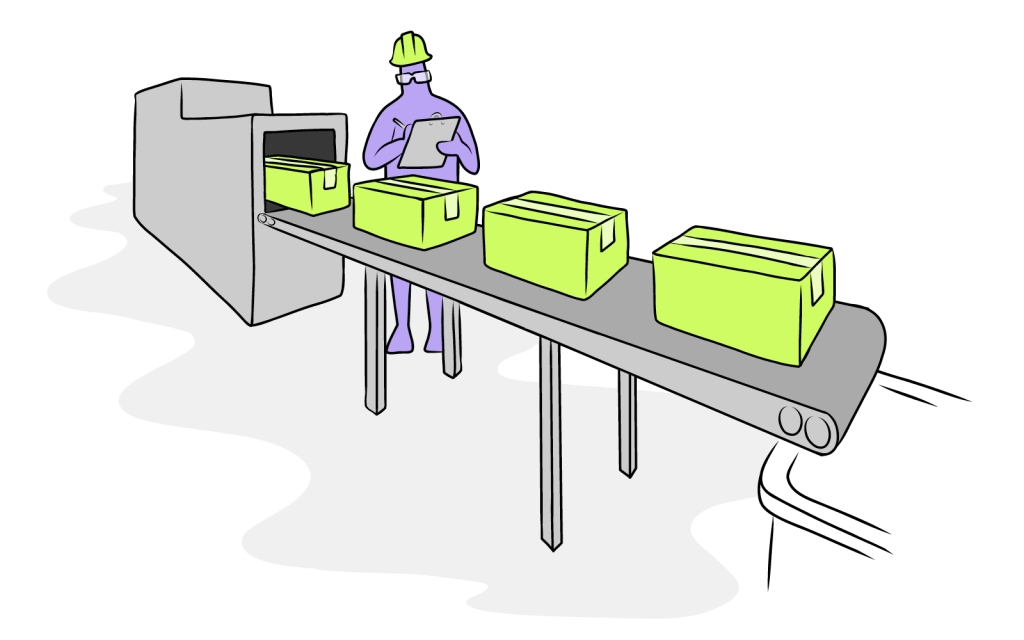
How we think about marketing is very inefficient these days. We throw people at problems and want clients to pick up the hourly bill, while we keep depending on our smartest people to use their instinct to solve problems that are very similar to the last ones they solved.
Here are the advantages of some degree of productization:
- Easier selling.
- Higher margins.
- Pricing consistency.
- More effective staff training and fewer key staff bottlenecks.
- Less scope creep.
- More predictable capacity prediction.
- Further differentiation to reinforce specialization.
Productization and Marketing
There are two reasons why we aren’t very good at this, I think. The first is that you can’t effectively productize generalist work. That’s because you aren’t incorporating deep pattern matching to find solutions quicker. Even today there are too many firms driving white, unpainted step vans around town and pretending that they are company vans.
The second reason is a bit more insidious: we want to be the rain dancers. The magical people who find solutions because we are inevitably important and the special sauce cannot be revealed. It seems confident, but it’s not. We’re afraid of being fired, and anything that makes our work seem easier is distasteful.
After all, productization is in the same category as “repeating yourself,” and we have this visceral reaction against that. Every project must be like a unique piece of art, carefully crafted from our souls (but still sold by the hour). Yet you’re cheating clients unless you’re repetitive, and repetition is at the uncomfortable core of productization.
Be Like McDonalds. Or Not.
Picture this. It was the first big time conference we had ever done. Hundreds of firms were there. And it was in Mexico, too, so the people who came were serious. They’d all traveled down, struggled through customs, took a conventional taxi to the venue, settled into their room, took a quick shower, grabbed a name tag and drink, met a few new friends, settled into one of the few empty seats left, and looked up to the stage in anticipation of the first speaker, a big name keynote.
And with a deep, gravel-like voice, this very short and very round man looked the audience in the eye, pointed at them like a sergeant would point to a private, and screamed:
“You should be running your creative firms like a McDonald’s franchise!”
The entire room took one collective gasp. Some people looked down, and everyone looked to the right and to the left in disbelief, and then roughly a fourth of them walked out. What had I, the guy who programmed all the speakers, just done? I wasn’t sure, yet, but I quickly reexamined my life choices.
That speaker I had put on stage was Michael Gerber, the author of “The E-Myth Revisited.” Up to that point, his work had been well received, especially around the concept he was famous for: “you’re not an entrepreneur as much as a technician who has suffered an entrepreneurial seizure.”
Here’s a summary of his perspective (from Claude):
His point is that most small businesses aren't started by true entrepreneurs — they're started by people who are good at a technical skill (plumbing, baking, coding, accounting, etc.) who one day get fed up working for someone else and think, "I could do this on my own." That moment of frustration is what he calls the "entrepreneurial seizure."
The problem, as Gerber sees it, is that being great at doing the work and being great at running a business that does the work are completely different things. The plumber who starts a plumbing company still thinks like a plumber — doing the jobs, solving the technical problems — rather than thinking like a business owner who builds systems, hires people, and works on the business instead of in it.
And he was right in diagnosing the problem, but incorrect is suggesting the solution to “be like McDonalds.” What he should have talked about is productization.
Productization is On a Spectrum
I wrote a somewhat controversial post recently about what my new firm might look like if I started one from scratch in this day and age. I said, “Our work would be loosely productized into roughly sixteen modules, combined uniquely into larger packages, but always heavily tailored to each client situation. This would promote better pricing and employee training…and data collection.”
What I’m pointing out is that productization is not the enemy of doing creative, unique, zero-based work for client. That’s because these many modules are combined creatively. That preserves the brilliance without reinventing the wheel every time.
Leaving You With This
Value-pricing is a wonderful thing. But it’s also inspirational and out of the reach of most firms. They just simply don’t have the understanding or patience or courage to take advantage of it.
The arguments for it are strong and the examples are inspiring, but only a few firms are going to do it well. That’s where productization comes in. It’s the next step up the sophistication ladder, it’s well within your abilities, and you should do it.
Start with the research portion of your work: the stuff you begin with in every engagement. Tighten the process, name it, start to collect proprietary data, and price it as a product. Aim for it to be your most lucrative offering.
Then sit back and watch the patterns emerge. Capitalize on your tight positioning by going even deeper. Crank the price a little higher. Talk about it on your website. Give the new client something easy to buy, right off the shelf.
But If You DO Eat at McDonalds
I get a Big Mac about twice every year. The urge builds, I make sure no one is watching, and I sneak in and get a No. 1 combo with Coke and fries. That’s a fully productized offering, and because of that it just sits under the warming light plotting the various ways it can kill you.
But here’s what you do if you want to break the productization cycle: order it with one small difference (I skip the pickles). That forces them to make a fresh one for you instead of giving you one that’s been sitting there since last Tuesday.
You still need to “cheat” productization, but the core concept will help you run a much better firm, doing more predictable work for clients, with all the other benefits I noted above.
————
Here are some resources if you’d like to explore this further:
- Three principles of service offering design, and how productization should be the first option.
- To standardize or customize, where David interviews Blair on how his thinking has changed.
- How productization relates to MRR.
- How productization becomes one of five options when encountering unclear scope.
- Overlap between productization and phased engagements (2 Bobs episode).